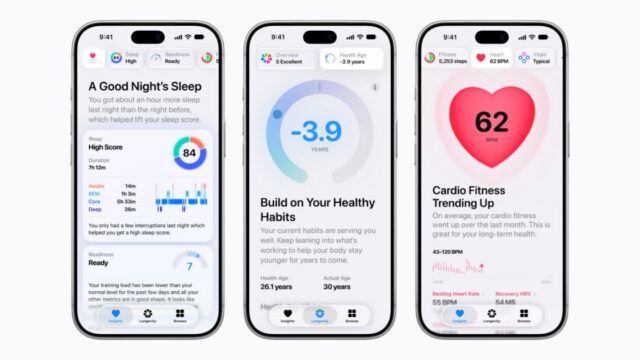
Apple Opens Health AI Study to 200,000 iPhone Users in the US
Apple's new Health AI Study app, built with OpenEvidence, takes up to 200,000 US iPhone users. See who can join and what happens to your data.
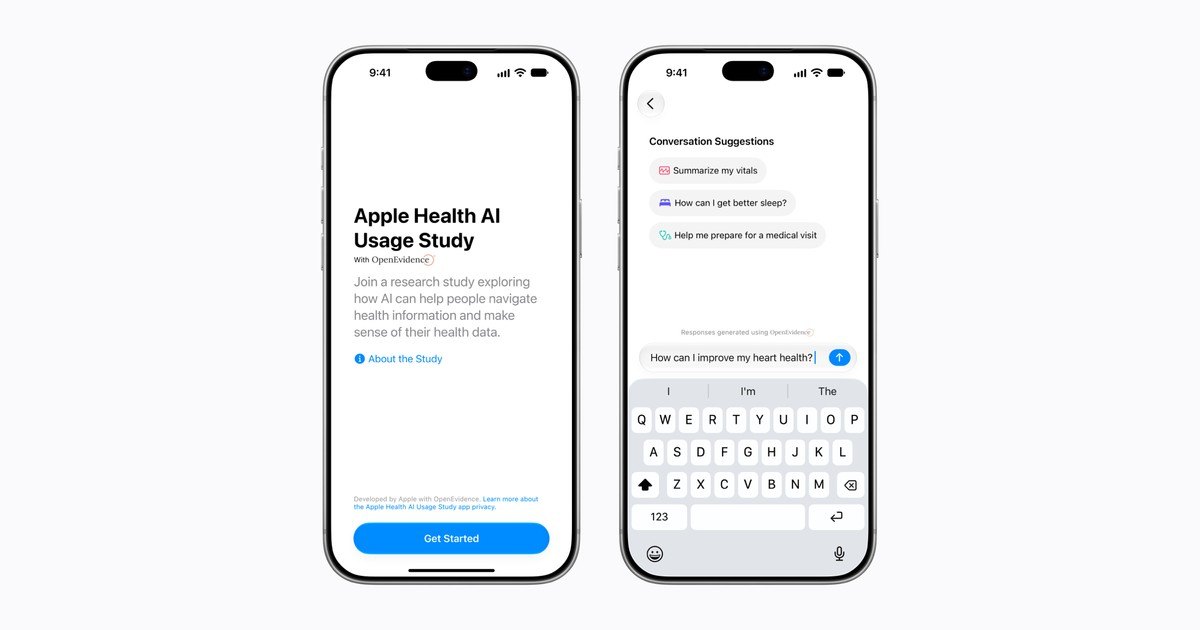
Apple launched a research app on Sunday that lets people ask an AI chatbot health questions and studies how they use the answers. The Apple Health AI Study is open to up to 200,000 participants in the US, and joining takes a recent iPhone.
Apple said the study will look at how people understand health AI, how much they trust it, the quality of its responses and what they do afterward. The company plans to use the findings to guide how it and the wider industry design these tools. Apple said study data will not be used to train AI models, though CNET reported it may inform Apple’s feature development.
Who can join and what you need
Participants must live in the US and be 21 or older. The app needs an iPhone 15 Pro or later with Apple Intelligence turned on, running iOS 26 or later. According to CNET, Apple said the app relies on those phones’ processing power and on-device Apple Foundation Models, which sort questions into categories.
Apple asks each person to take part for up to 12 months. After a baseline survey, participants get monthly surveys, plus extra ones about preparing for doctor’s visits. Users with a paired Apple Watch receive check-in notifications with suggested topics. CNET reported that someone who stops taking part entirely may be removed from the study.
How the chatbot works
Apple partnered with OpenEvidence, an AI platform built for doctors. It writes answers from medical sources that include The New England Journal of Medicine, the Journal of the American Medical Association and Nature. CNET’s list also names the National Comprehensive Cancer Network and the Cochrane Database of Systematic Reviews.
Participants type in questions about general health, specific symptoms or recovery from a procedure, and each answer comes with linked, peer-reviewed clinical citations. They can also ask about their own health data. TechCrunch reported that users can rate answers and leave feedback.
Sharing HealthKit data is optional. HealthKit is Apple’s hub for health and fitness data from the iPhone and Apple Watch. Participants can share sleep, lab results, activity and resting heart rate to get more personalized answers. They first have to add their clinical records to Apple’s Health app, then separately choose to pass them to the study app.
What happens to your questions
The iPhone first strips out details that could identify the participant. The question then goes to a secure cloud environment run by a third-party contractor, UST Global, where it is separated from the participant’s ID and screened again. Last, it reaches OpenEvidence, which generates the answer. OpenEvidence deletes both the question and the response within 24 hours.
A small group of Apple researchers will see coded survey responses without personal identifiers, summaries of conversations and the most common conversation types. Participants also share demographic details such as race, age and education level, which Apple says it will use to study how those factors affect preferences and communication needs.
Why it matters
CNET notes that one in three US adults use AI chatbots for health information. TechCrunch adds that OpenAI said earlier this year that users were sending over 300 million health-related queries each week, and that OpenAI and Anthropic have both offered chatbots with health features. Apple is taking a different route for now: a closed study with clinically sourced answers. TechCrunch reported that it is not clear whether Apple plans to bring AI answers to its Health app or Siri.
The app has built-in guardrails. When it detects a concerning question, it suggests that the participant follow up with a provider or other resources. Nobody monitors conversations live, and CNET reported that study staff will not contact participants if someone asks about self-harm. Apple says the app does not diagnose or treat any condition and is no replacement for a doctor.
The Apple Health AI Study app is available in the App Store now. No publication date has been set for the study’s results.
Sources: CNET, TechCrunch, Apple Newsroom