New USB Boot Tool Lets RTX 20, 30 and 40 Owners Lift Nvidia’s AI Throttle
An open-source tool run from a USB stick unlocks full tensor speed on many GeForce cards under Windows, with gains up to 65% in one test but real caveats.
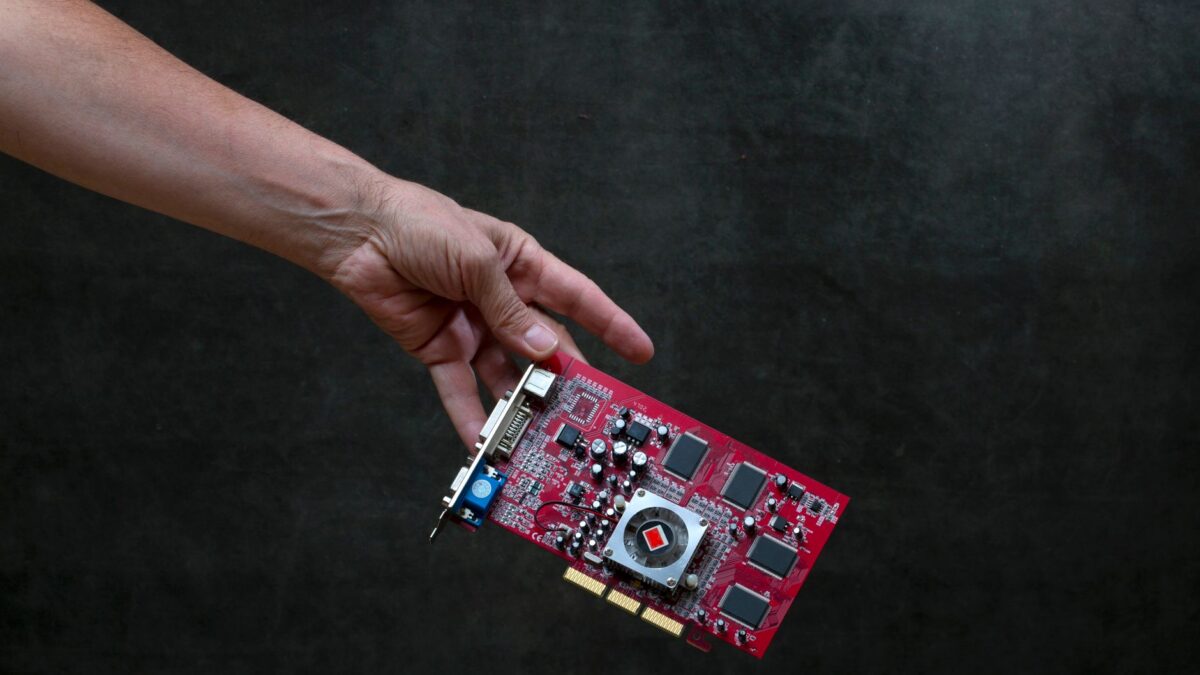
A new open-source tool called nv-uefi-unlocker promises to remove a speed limit that Nvidia places on the AI math units of GeForce graphics cards. It runs from a USB stick before Windows starts, works on RTX 20, 30 and 40-series desktop and laptop cards, and needs no graphics BIOS flash or modified driver. The developer’s own RTX 4060 laptop reached 65% higher FP16 matrix math performance, according to a report from Tom’s Hardware.
What the tool does
Nvidia’s consumer cards contain tensor units, the circuits that speed up the matrix math used in AI work. On GeForce cards, these units are held to roughly half speed for some calculations. The new project removes that limit by changing two speed-selector registers, which are small settings inside the chip. It does this by getting Nvidia’s own signed firmware to open the write lock on those settings, then checks by reading the values back to confirm the change took hold.
The download contains scripts and self-built programs, but no Nvidia firmware. One script fetches Nvidia’s public 610.43.03 driver packages, verifies them and rebuilds the needed firmware files on your own computer. The project credits earlier community work, including Zagitta’s gpu-unlock, as its base.
How it works in practice
You copy the rebuilt files and a boot file onto a USB stick formatted as FAT32, then pick the stick from a one-time boot menu. You have 30 seconds to confirm by pressing the spacebar, after which the computer carries on loading Windows or Linux as normal.
Because the change happens before the operating system loads the Nvidia driver, it does not survive a power loss. That means you must repeat the process every time you boot. Other conditions apply:
- The PC must boot in UEFI mode, with Secure Boot either off or set to trust a self-signed boot file.
- RTX 20 owners must first run a bundled script that switches the Windows Nvidia driver to GSP firmware mode, then restart.
- On laptops, the Nvidia chip must be powered at startup, so a dGPU-only or MUX mode is recommended.
Which cards work
The project lists RTX 30-series cards as fully compatible, RTX 40-series cards as fully compatible on both laptops and desktops, and RTX 20-series cards as fully compatible with some known problems. The GTX 16 series is only “theoretically compatible”, while older cards and the RTX 50-series are not supported. Support is decided by chip family, so a card being covered does not mean that exact model has been tested.
Confirmed Windows successes include the RTX 2070, RTX 3080, RTX 4090 and RTX 4060 Laptop. The RTX 2080, 2080 Super and 2080 Ti fail at boot or handoff for now, and the project says they are under review without promising dates.
What the numbers show
Reported gains vary by card and by test, so the project warns against comparing rows against each other. Some examples from the published table:
- RTX 2070: from 36 to 60-63 TFLOPS, a gain of 67-75%, measured by the developer.
- RTX 3060 12GB: from 25.37 to 45.79 TFLOPS, reported by an owner.
- RTX 4060 Laptop: from 29.89 to 49.33 TFLOPS, measured by the developer.
- RTX 4080: from 100.37 to 192.18 TFLOPS in a BF16 test, reported by an owner.
- RTX 4090: from 118.42 to 171.52 TFLOPS, held back by its power limit.
TFLOPS means trillions of calculations per second. Many results come from owners rather than from independent testing.
What this means for readers
The unlock matters mainly to people who run AI software locally on a GeForce card, for example image generators or language models, and want more speed from hardware they already own. It is not a gaming boost, and the sources do not claim any. It is also not for everyone: it involves changing boot settings, repeating a procedure each startup, and relying on unofficial community software.
There are warnings to take seriously. The tool cannot get around game anti-cheat systems that require Secure Boot, a team member said on Reddit. The project says combining it with a separate power-limit unlock “can exceed factory power and thermal envelopes”. A planned per-card ROM hash check is not built yet, and persistence on Thunderbolt external graphics boxes is “not guaranteed”. Whether this affects your warranty is not covered in the sources, so check Nvidia’s and your manufacturer’s terms before trying it.
What comes next
The team says a boot-from-disk toggle is in the works, which should make the process easier. RTX 50-series owners will have to wait: the developers say those cards have “a lot more security” than they expected and they are still trying to crack them. For everyone else, the sensible course is to wait for more independent testing before trying it on a card you rely on.
Source: Tom's Hardware